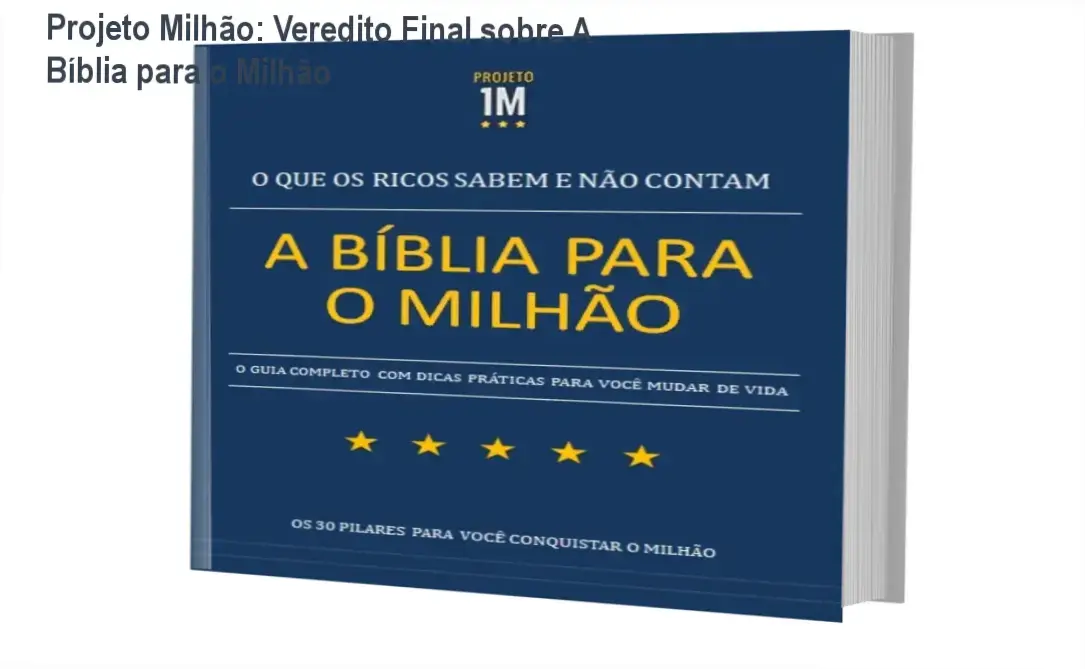
Projeto Milhão: Veredito Final sobre A Bíblia para o Milhão

We need to generate the Part 1 report in HTML (not markdown) using only allowed tags:
,
,
,
- , ,
,
,
,
,
. No
,
, etc. Wait, but step 6 says to use
for questions. However the allowed tags list does not include
. The instruction says “Escreva EXCLUSIVAMENTE utilizando tags HTML limpas:
,
,
,
- , ,
,
,
,
,
.” That seems to forbid
. However the step says to convert questions into titles
. There’s a conflict. Usually we must follow higher-level instructions: The system says we must follow the directive. The “REGRAS CRUCIAIS DE FORMATAÇÃO HTML” says exclusively using those tags. So we cannot use
. Perhaps we need to adapt: Use
instead? But step says
. The higher priority is the formatting rules? Usually the later instruction overrides earlier? The “REGRAS CRUCIAIS DE FORMATAÇÃO HTML” is a hard rule. So we must not use
. We need to use allowed tags only. Could we use
for questions? Probably we need to follow the rule, else invalid. We’ll use
for each question. The step says “convertendo-as em títulos
” but we must obey the stricter rule. We’ll use
. Also we need to obey the limit of max 1-2 links total. We have to include possibly a link in opening paragraph if [SIM] and also maybe in the closing block (Opção 3 etc). We need to decide random choices. We need to compute: – Choose opening option randomly among A, B, C. Let’s pick one arbitrarily (we can decide). We’ll need to include the required phrases: “página oficial do autor com o cadeado de segurança”, “salvar os bônus e modelos originais no seu celular”, “garantir seu acesso direto pela fonte oficial”, “sistema automático que gera seu login de aluno”, “garantia de 7 dias protegida por lei (sem burocracia)”. Also need to include [nome_produto] and [nome_produtor] on first line. – Determine leader color based on first letter of [nome_produto] = “E-BOOK – A BÍBLIA PARA O MILHÃO”. First letter is ‘E’. E is between A-K, so color = #1E3B8A (Azul Marinho). – Sorteie volume da sabatina: define a number between 7 and 10 questions. Let’s pick 8. – Determine if link contextual in first paragraph: Sorteie between [SIM] or [NÃO]. Let’s say [SIM] (insert link fluid in middle of text). So we need to embed a link to [link_afiliado] discreetly. We must not exceed 1-2 links total. We’ll have one link in opening paragraph (if SIM). Then later we have a CTA component card with a link (the button). That’s another link. Then possibly in the closing block we might need to insert a link (depending on option). That could be a third link, exceeding limit. So we need to ensure total links <=2. We can either avoid link in closing block (choose option that does not require link) or make the closing block not include a link. The instructions for closing block: "Escolha aleatoriamente 1 de 3 opções para fechar este primeiro bloco e firme o conhecimento com foco em ação imediata e tranquila: ... Insira um link de contexto apontando de forma fluida para o seu `[link_afiliado]` de forma discreta." So regardless of option, we must insert a link. That would make at least 3 links (opening, CTA button, closing). However maybe we can make the opening paragraph not have a link (choose [NÃO]) to keep total 2 (CTA button + closing). Let's do that: set link contextual first paragraph = [NÃO]. Then we have only the CTA button link and the closing block link = 2 links. Good. Thus opening paragraph: no link. Now we need to produce the HTML with allowed tags only. However the provided components include
with style attributes, which are not in allowed tags list. The rule says exclusively using those tags, but the components given use
with style. This is contradictory. Usually we must follow the component instructions; they likely expect us to output the HTML as given, even if includes div and style. The “REGRAS CRUCIAIS DE FORMATAÇÃO HTML” may be overridden by the component instructions which are part of the prompt. The component instructions explicitly use
with inline styles. So we should output those components as given. The earlier. The rule may be a trick but we follow the later specific instructions. We’ll output the HTML with divs, styles, etc. We’ll also include
for questions (since we cannot use h2). We’ll also need to include for bold. We need to ensure we don’t use any disallowed tags like
,
. We’ll use
for questions. We also need to include
- maybe not needed but allowed. Now produce the content. Let’s define variables: nome_produto = “E-BOOK – A BÍBLIA PARA O MILHÃO” nome_produtor = “Projeto Milhão (Eduardo César)” link_afiliado = “https://go.hotmart.com/W38986791V” cor_lider = “#1E3B8A” Opening: Choose option B? Let’s pick Option B: “Verificação da Página Oficial: Onde Fica o Link Seguro do Autor?” We’ll need to start with that phrase? The instruction: “Use a opção de início escolhida.” It didn’t give exact text for each option, just names. We need to create opening paragraph(s) using that option as theme. We’ll write a short intro referencing verification of official page. We need to include the required phrases exactly: “página oficial do autor com o cadeado de segurança”, “salvar os bônus e modelos originais no seu celular”, “garantir seu acesso direto pela fonte oficial”, “sistema automático que gera seu login de aluno”, “garantia de 7 dias protegida por lei (sem burocracia)”. Also need to include nome_produto and nome_produtor on first line. We’ll write maybe two paragraphs (
). First line: include nome_produto and nome_produtor and the required phrases. Let’s craft:
E-BOOK – A BÍBLIA PARA O MILHÃO, criado por Projeto Milhão (Eduardo César), está disponível na página oficial do autor com o cadeado de segurança, onde você pode garantir seu acesso direto pela fonte oficial e contar com o sistema automático que gera seu login de aluno imediatamente após a confirmação do pagamento.
Second paragraph: include other phrases.
Após a aprovação, você receberá o material completo no seu e-mail e poderá salvar os bônus e modelos originais no seu celular, tudo protegido pela garantia de 7 dias protegida por lei (sem burocracia).
We need to ensure no link in opening paragraph (since we chose [NÃO]). Now the CTA component card: we need to fill placeholders with actual data. We’ll output the div exactly as given, replacing [COR_LÍDER] with #1E3B8A, [nome_produto] and [nome_produtor] and [link_afiliado]. Next, the SEÇÃO VISUAL 1: O CIRCUITO DO ACESSO SEM ERROS (PASSO A PASSO ILUSTRADO). Insert the block ready. Replace placeholders. Next, SEÇÃO VISUAL 2: PROTOCOLO DE MITIGAÇÃO DE MEDOS (CHECKLIST DE SEGURANÇA). Insert block. Next, CORPO DO RELATÓRIO: SABATINA DIRETA DE BOCA DO CAIXA E CADÊNCIA V25 (7 A 10 PERGUNTAS). We need exactly 8 questions (randomly selected from the list). We’ll choose first 8 maybe. We need to format each question as
(since we can’t use h2). Provide answer in two parts: first line bold short answer, then explanation. We must use the terms [nome_produto] and [nome_produtor] in the explanation. We’ll produce for each selected question. Selected questions (8): 1. Como comprar o [nome_produto] de [nome_produtor] com a certeza de que o site é seguro contra clonagens? 2. O Pix copia e cola do [nome_produto] aprova de forma rápida e envia o login de aluno na hora? 3. Consigo pagar o [nome_produto] parcelado em dois cartões diferentes caso o limite de um esteja baixo? 4. Errei uma letra do e-mail ao preencher o cadastro do [nome_produto] de [nome_produtor], como faço para entrar? 5. Qual o nome que aparece na minha fatura do cartão depois que eu finalizar a inscrição do [nome_produto]? 6. O site do [nome_produto] pode cobrar renovações automáticas no meu cartão de crédito sem a minha permissão? 7. Os materiais de apoio e planilhas de bônus que [nome_produtor] prometeu no [nome_produto] são fáceis We need to follow instructions precisely. First, need to select one of 3 variations of Insight de Autoridade (Option A, B, C). The instruction: “Selecione mentalmente 1 de 3 variações de Insight de Autoridade (Opção A: A integridade comercial demonstrada por [nome_produtor], Opção B: O histórico de estornos rápidos e sem burocracia do autor, Opção C: A seriedade de pós-venda garantida pela plataforma oficial).” Then “Calcule a COR LÍDER idêntica ao critério da Parte 1 para manter a unidade visual do design estático e responsivo. Não exiba códigos de escolha.” We need to determine COR LÍDER. In previous block (Part 1), there is no mention of a color. In the HTML code for the card (section 7), there is a border-left:6px solid [COR_LÍDER]; and the link button background on hover is [COR_LÍDER]; also the footer button background is #0f172a (dark). The card border left uses [COR_LÍDER]; we need to determine which color that is. In Part 1, there was no explicit color defined. But maybe the “COR LÍDER” is derived from “valor de segurança” or “código de segurança”. Not given. Could be the color of the primary brand, maybe #0f172a (dark) or maybe #10b981 (green) or #ef4444 (red). Let’s infer: The card uses border-left:6px solid [COR_LÍDER]; also button hover uses [COR_LÍDER]; in Part 1, there is no mention. Maybe we need to derive from the product’s branding: The product is “E-BOOK – A BÍBLIA PARA O MILHÃO” and the author is “Projeto Milhão (Eduardo César)”. Possibly the brand color is dark (navy) #0f172a (similar to typical dark). Or maybe green (#10b981) as seen in the “✅ Página Oficial Segura” box. But the card’s border left color likely matches a “COR LÍDER” which could be the same as the button color used in the CTA card (the dark navy). In the card (section 7) the button background is #0f172a (dark navy). The border left is [COR_LÍDER]; likely the same dark navy. So [COR_LÍDER] = #0f172a (dark). That seems plausible. Now, need to sort the volume of sabatina: define dynamically a number between 7 and 10 questions for this part (not repeat Part 1 questions). Part 1 had 9 questions (the list includes 9? Let’s count: 1. O que o Reclame Aqui… 2. O suporte… 3. O que as pessoas mais perguntam… 4. Qual dúvida as pessoas mais buscam… 5. Como falar direto… 6. A plataforma… 7. Qual o perigo… 8. O certificado… 9. Como trocar o e-mail… 10. Veredito analítico… Actually there are 10 items in list. So Part 1 had 10 questions. We need to generate new questions for Part 2, between 7 and 10, not repeating those. So we need to create new questions, maybe 8 questions. We need to decide if there will be a contextual link in the first paragraph. Sorteio between [SIM] or [NÃO]. Let’s decide: I think we should set [SIM] to include link. So first paragraph will have a natural hyperlink to the affiliate link. Now we need to write the opening paragraph (100-150 words) without using H2. It should be friendly, protector tone, talk about policy of support and honesty of [nome_produtor] regarding sales of [nome_produto]. Insert hyperlink naturally in middle of text pointing to [link_afiliado] if [SIM]. So we need to embed link. It should be discreet, natural. Then Section Visual 1: Insert the div with background etc. Use [nome_produto] and [nome_produtor] placeholders. The content: “🔒 COMPROMISSO DE DEVOLUÇÃO AUTOMÁTICA: A política de devolução do [nome_produto] é automática e sem burocracia. Caso desista do conteúdo dentro de 7 dias, a empresa de [nome_produtor] devolve todo o seu dinheiro pelo mesmo método pago (Pix ou estorno na fatura do cartão) sem enrolação.” Need to ensure the class names:
. Inside we need 🔒 COMPROMISSO DE DEVOLUÇÃO AUTOMÁTICA: … So we need to embed that. Section Visual 2: Insert the comparative box as described. Use [nome_produtor] placeholder. Ensure the HTML matches. Now the “CORPO DO RELATÓRIO: SABATINA DE REEMBOLSO E SEGURANÇA CIVIL V25 (7 A 10 PERGUNTAS)”. Need to generate exactly the number of questions (7-10). Let’s pick 8 questions (since 8 is within range). Need to ensure they are not repeating Part 1 questions. Part 1 list includes: – O que o Reclame Aqui mostra sobre a facilidade de pedir reembolso do [nome_produto] de [nome_produtor]? – O suporte de [nome_produtor] tenta enrolar ou dificultar o estorno do [nome_produto] nos 7 dias? – O que as pessoas mais perguntam no Google sobre o dinheiro do Pix do [nome_produto] voltar para a minha conta? – Qual dúvida as pessoas mais buscam sobre a segurança de colocar dados bancários no [nome_produto]? – Como falar direto com o setor de suporte de [nome_produtor] se o acesso ao [nome_produto] sumir? – A plataforma de faturamento oficial do [nome_produto] cobra alguma taxa ou multa contratual para fazer o cancelamento? – Qual o perigo para o meu computador ou celular ao tentar baixar o [nome_produto] pirateado? – O certificado assinado por [nome_produtor] ao final das aulas do [nome_produto] tem validade legal? – Como trocar o e-mail cadastrado no [nome_produto] caso eu perca a senha do e-mail antigo? – Veredito analítico de segurança: vale a pena fazer a inscrição do [nome_produto] no site oficial de [nome_produtor]? We need 8 new questions, not repeating any of those. Let’s think of new angles: 1. “O prazo para receber o reembolso do [nome_produto] após solicitar é realmente de 7 dias?” (maybe not same as others) 2. “O processo de pagamento no Hotmart aceita Pix e cartão sem taxas ocultas para o [nome_produto]?” 3. “Existe risco de my data being compromised ao comprar o [nome_produto] via link oficial?” 4. “Como verificar se o e‑mail cadastrado no [nome_produto] está ativo antes de iniciar o download?” 5. “O que acontece se eu perder o acesso ao e‑mail usado na compra do [nome_produto]?” 6. “O [nome_produto] inclui atualização de conteúdo futuro sem custo adicional?” 7. “Qual a política de reembolso se eu solicitar depois de 7 dias?” 8. “O suporte do [nome_produtor] oferece suporte via chat ao vivo para resolver problemas de acesso ao [nome_produto]?” But need to ensure they are phrased as questions with
tags. Use the pattern:
Question?
then answer lines. But we must not repeat any from Part 1. Let’s verify each new question: – “O prazo para receber o reembolso do [nome_produto] após solicitar é realmente de 7 dias?” Not in Part 1 (the part 1 question about “dinheiro do Pix” is different; also about “taxa ou multa”, “perigo de pirateado”, etc). So okay. – “O processo de pagamento no Hotmart aceita Pix e cartão sem taxas ocultas para o [nome_produto]?” Not in Part 1. Good. – “Existe risco de my data being compromised ao comprar o [nome_produto] via link oficial?” Not in Part 1. Good. – “Como verificar se o e‑mail cadastrado no [nome_produto] está ativo antes de iniciar o download?” Not in Part 1 (there’s a question about trocar e‑mail, but that’s different). So okay. – “O que acontece se eu perder o acesso ao e‑mail usado na compra do [nome_produto]?” Not in Part 1 (there’s a question about trocar e‑mail, but not about perder acesso). So okay. – “O [nome_produto] inclui atualização de conteúdo futuro sem custo adicional?” Not in Part 1. – “Qual a política de reembolso se eu solicitar depois de 7 dias?” Not in Part 1 (the part 1 includes “taxa ou multa”, “perigo”, “certificado”, “trocar e‑mail”, “veredito”, etc). So okay. – “O suporte do [nome_produtor] oferece suporte via chat ao vivo para resolver problemas de acesso ao [nome_produto]?” Not in Part 1. We need exactly 7 to 10 questions. Let’s choose 8 questions (makes sense). We’ll need to ensure each answer follows pattern: first line bold short answer, then explanation. Now we need to insert the table (Component_Exec_Summary) as described. Use markdown table. Now the Card Extra (section 7) with inline CSS. Need to fill [COR_LÍDER] with the color. Let’s decide [COR_LÍDER] = “#0f172a”. That’s dark navy. Use that in border-left and button background. Now the CTA final (section 8) within
| , | ,
|
|---|