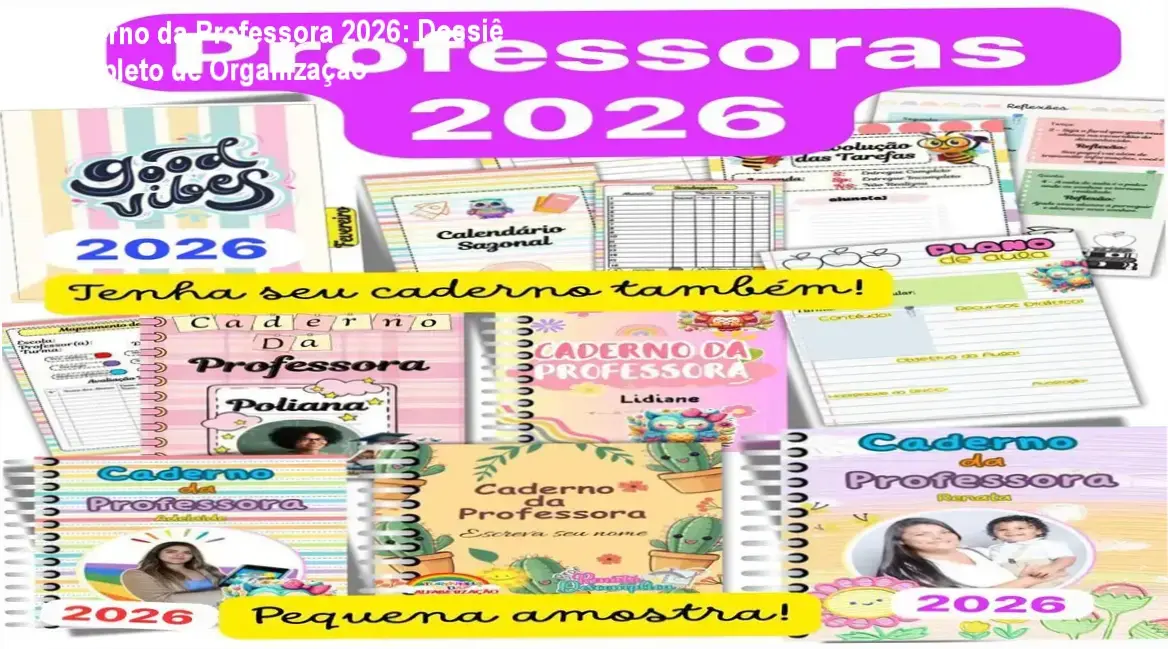
Caderno da Professora 2026: Dossiê Completo de Organização

Organizar a rotina docente em 2026 exige mais do que boa vontade; exige um sistema que dialogue com a realidade da sala de aula e elimine a sensação de estar sempre correndo atrás do prejuízo. O Caderno da Professora 2026 + Sondagem Diagnóstica surge como uma resposta técnica a esse caos operacional, consolidando planejamento, registro pedagógico e gestão de turma em um único fluxo de trabalho editável no Canva.
Muita professora olha para colegas organizadas e acha que aquilo é “dom” ou “perfil nato de planejadora”. Isso é um mito perigoso. O mercado sério de educação não vive de inspiração mágica, mas de processos técnicos organizados e repetíveis. Ter em mãos um guia definitivo para começar do zero quebra totalmente esse bloqueio psicológico. Para facilitar sua vida e provar que qualquer profissional comum é capaz, a especialista Caderno da Professora traduziu toda a complexidade burocrática em regras simples e estruturou o Caderno da Professora 2026 + Sondagem Diagnóstica, um plano perfeito para iniciantes feito para aprender sem gastar muito tempo ou dinheiro com testes manuais desgastantes. A grade completa de soluções está disponível na página oficial do autor com o cadeado de segurança, contando com uma garantia de 7 dias protegida por lei para você abrir os materiais e conferir a simplicidade das explicações sem correr nenhum risco.
Não dependa da sorte ou de ideias geniais para evoluir. O método estruturado no Caderno da Professora 2026 + Sondagem Diagnóstica foi desenvolvido por Caderno da Professora para ser um roteiro baseado na repetição de moldes que já funcionam no mercado, poupando meses de esforço solitário na internet.
➡️ Pegar os Modelos de Execução Direta na Página Oficial do Autor
📋 Por que seguir regras organizadas supera qualquer talento natural:
we need to output the question as
…
. Then answer: first line short and bold containing a real civil direction of the niche, then subsequent lines explaining simply how to act, inserting [nome_produto] and [nome_produtor] fluently in the closing. We must not exceed link limit. We already have CTA card link (one). We’ll need a link in step 7 bloco de fixação. That will be second link. So we must not have any other tags. Thus in the answers we must not insert any links. Now step 7: “Bloco de fixação e insight de transição (LINKS COMPLEMENTARES)” includes two bullet points. Then “Insira um link de contexto apontando de forma fluida para o seu `[link_afiliado]` de forma discreta.” We need to insert a link (maybe a simple tag) after the bullet points. We’ll do that. Thus total links: CTA card button + step 7 link = 2. Now we must ensure no other tags appear. The CTA card includes an tag. The step 7 link will be another . Ensure we don’t accidentally include any other (like in the opening paragraph we chose NÃO, so none). Also ensure we don’t have any inside the card besides the button. The card includes only that . Good. Now we need to produce HTML only (no markdown). Use allowed tags:
,
,
,
- , ,
,
,
,
. Also we can use
with inline styles as given in the components. The directive includes many
with style attributes. Are those allowed? The rules say we can use those tags; they didn’t restrict
. It says “Escreva EXCLUSIVAMENTE em HTML limpo usando:
,
,
,
- , ,
,
,
,
. Do não use markdown or h1.” It seems they restrict to those tags only, but the components they gave include
and etc. This is contradictory. However earlier instructions for Engine Editorial V80.0 gave specific HTML blocks with divs and spans. Likely they expect us to output those blocks as given, despite the earlier generic rule. The later rule may be overridden by the specific instruction. We’ll follow the Engine Editorial instruction which includes divs and spans. So we will output those blocks. We must ensure we don’t use any other tags like
for the questions (they said use
as titles). That’s allowed? The earlier allowed tags list didn’t include
, but the instruction says to use
. We’ll follow the instruction. Thus final output will be a mix of tags. Now produce content. First, decide opening option: choose randomly; we can pick Option B: “
| , | . Also we can use
with inline styles as given in the components. The directive includes many
with style attributes. Are those allowed? The rules say we can use those tags; they didn’t restrict
. It says “Escreva EXCLUSIVAMENTE em HTML limpo usando:
, ,
|
|---|